Trace the Message, Not Just the Request: Observability Across Queues
Asynchronous systems break the straight line between request and response. Learn how to preserve trace context, model message processing, and detect failures across queues.
Asynchronous systems break the straight line between request and response. Learn how to preserve trace context, model message processing, and detect failures across queues.
A practical guide to configuring OpenTelemetry Collector memory limits, understanding backpressure, and preventing data loss during traffic bursts or backend outages.
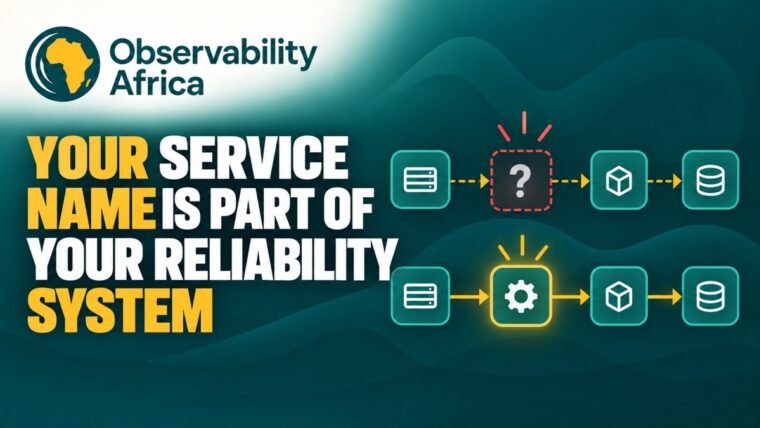
Inconsistent OpenTelemetry service identity breaks service maps, dashboards, alert ownership, and incident response. Use a small identity contract to make telemetry dependable.
Many teams still page engineers when CPU, memory, or a single error-rate threshold crosses a line. The alert may be technically correct and operationally […]
Observability data can become a security problem when it records more than engineers intended. Logs, traces, and metric attributes often cross application, network, storage, […]
Keeping fewer traces can improve observability, if the traces you keep are the ones that explain failure. Many teams begin with simple probabilistic sampling: […]
A trace that looks complete at the API boundary can still lose the most important part of the work. The request returns, a message […]
High-cardinality metrics can raise costs and quietly weaken dashboards and SLOs. Build a practical metric budget that protects both infrastructure and operational meaning.
A healthy payment API does not prove that users completed their journey. Learn how to define user-centered SLIs, instrument meaningful transitions, and connect payment reliability to operating decisions.
A larger queue is not a delivery guarantee. Learn how to size an OpenTelemetry Collector outage window, validate persistent storage, and test recovery without risking production telemetry.