Why Observability Engineering Matters in Africa’s Digital Transformation
Why observability engineering is foundational to trust, resilience, and scalable digital growth across Africa’s evolving digital systems.
Why monitoring cost should be judged by detection quality, diagnosis speed, and operational trust, not subscription price alone.
Why telecom environments expose reliability gaps quickly and what other digital teams can learn from their observability discipline.
How adaptive, data-driven monitoring can improve anomaly detection, telemetry efficiency, and system reliability in constrained operating environments.
Why incident readiness for smaller teams should focus on clarity, critical signals, and disciplined response instead of process overload.
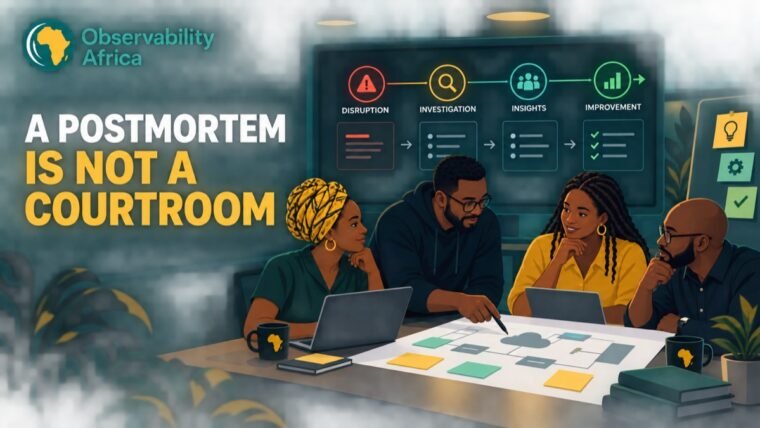
Retrospectives help teams turn painful incidents into repeatable operational learning, especially when every outage carries outsized cost.
Incident response must still work when logs arrive late, metrics are partial, or the network path itself is part of the problem.
Alert fatigue is especially damaging when a small team already carries product, support, and infrastructure responsibilities at the same time.
A launch is not only a product milestone. It is an observability test of whether the team can detect, diagnose, and respond when real traffic meets real constraints.